
Washington County VINE Coverage
Ohio VINE receives custody data from participating sheriff jail-booking systems, the Ohio Department of Rehabilitation and Correction, and the Department of Youth Services. Washington County users can reach it through VINELink, the VINEmobile interface, the Ohio telephone service, and supported TTY access. The reporting agency on a matched record matters. A county-jail event and an ODRC prison event belong to different custodians even when they involve the same person.
VINE is a status and notification layer. It is not a complete historical ledger. Ohio lists county-jail events such as general release, transfer, escape, and death. ODRC supplies general release, prison transfer, death, parole-related advance notices, revocation or return, release from parole, Transitional Control review, and other specified events. Read the event label literally. A transfer notice means custody moved; it does not prove the person returned to the community.
The Ohio Attorney General's VINE access page shows the state's official entry points and its verification warning.
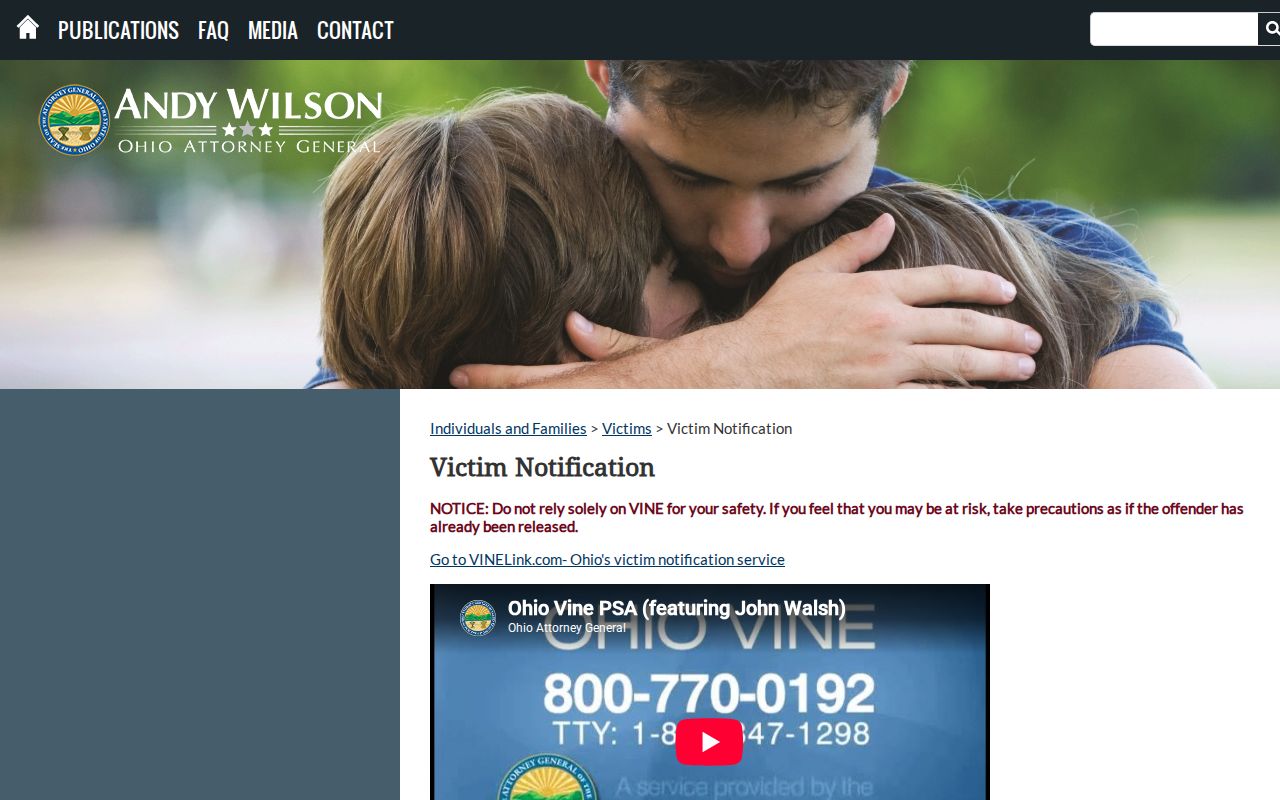
That state page is useful when a person needs the phone route or cannot reach the vendor interface. It also reinforces that another official source should confirm the custody event.
Youth-system coverage does not remove juvenile-record limits. A youth's placement or discharge is governed by the juvenile court and protected records, not the adult Washington County jail workflow. The adult jail search should not be used to infer a juvenile status. VINE may carry an authorized DYS event, but public access and identifying detail remain controlled by the proper youth system.
Search Washington County VINE Records
A careful one-person search starts with the correct state. Choose Ohio, then enter the person's name or a supported identifying number. Broader name results can include people from several agencies. Compare visible identifiers and the reporting jail or prison before opening a record. Do not select the first similar name. A Washington County booking should identify the relevant local feed, while a state commitment should point to ODRC.
The service is most useful for present custody and future notifications. A released display can support a release event sent by the source agency, but the exact event still needs confirmation. An inability to register or a missing result is ambiguous. It can stem from spelling, duplicate names, short-term holding, a delayed feed, a transfer between systems, an aged-out event, or custody outside VINE coverage.
- Open VINELink and select Ohio as the state.
- Choose the custody or offender search and enter a name or supported identifier.
- Compare candidate details and the reporting agency before selecting the matched person.
- Open the record and read the present status and most recent custody event.
- Verify a release, transfer, or other change with the agency that supplied the record.
The successful Ohio VINELink interface capture shows the entry point used for the person and custody search.
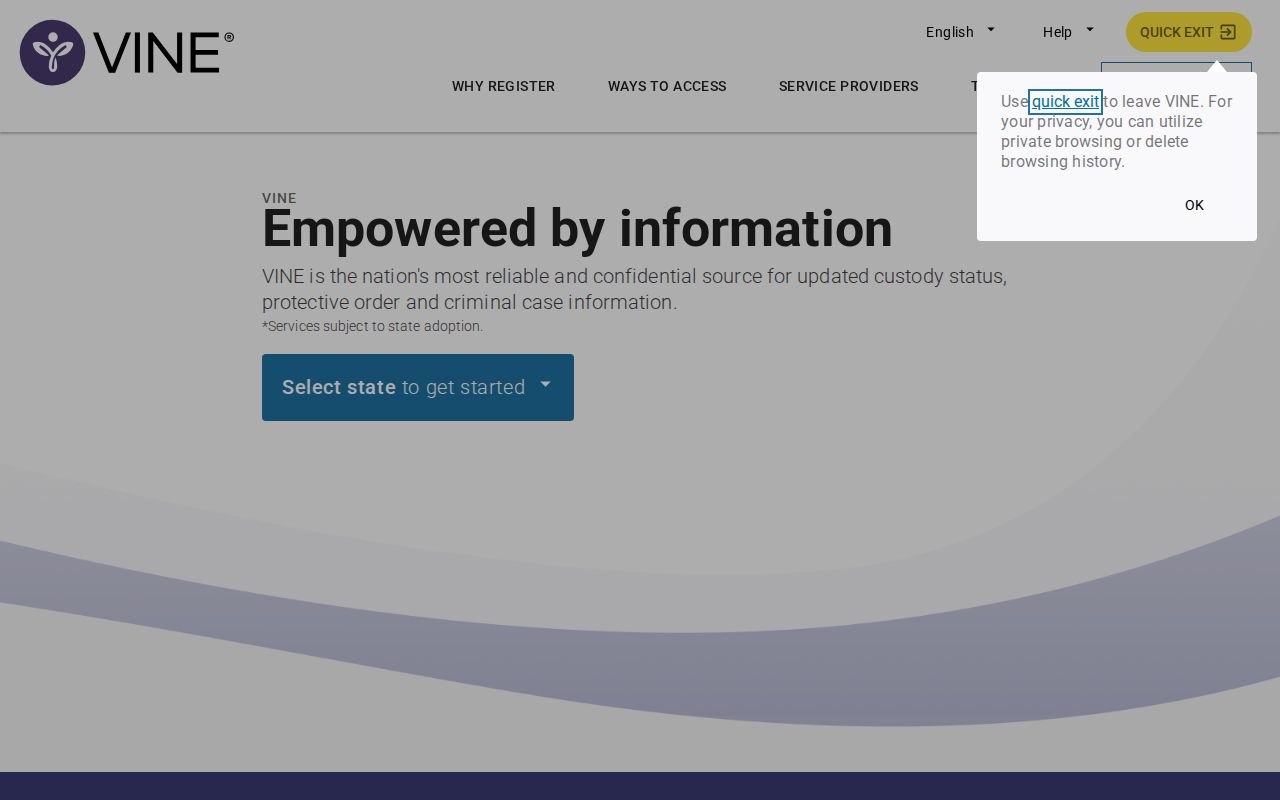
The state and agency context on the screen should be checked before any status is tied to a Washington County case.
If several candidates share a name, stop and gather another identifier. The reporting agency, age or birth date, middle name, offender number, and known custody history can narrow the match. Do not rely on a photograph alone. Images can be old, and not every feed presents them in the same way. A wrong match can create an alert for an unrelated person and obscure the event that actually matters.
Note: A no-result is not release proof because spelling, feed timing, transfers, retention, or nonparticipating custody can all affect the search.
Washington County VINE Release Fields
Available fields vary with the source and the current vendor display. The core task is to match identity, agency, status, and event. A scheduled date from a prison source is not the same as an actual release event. Likewise, a county-jail transfer may close the local custody entry while another agency still holds the person. When details are thin, the source agency record should supply the durable answer.
| Field or item | How to read it |
|---|---|
| Name and identifier | Match the intended person; use other visible identifiers when names repeat. |
| Reporting agency | Shows which jail, prison, or youth system supplied the data. |
| Custody status | States the current feed status, which may require direct agency confirmation. |
| Custody event | May identify release, transfer, escape, death, or another listed change. |
| Facility or location | Helps distinguish Washington County jail custody from state custody. |
| Notification choices | Shows channels offered for the matched record and selected events. |
A release date in VINE should be checked against the Washington County released-person search or sheriff record when the event began at the county jail. For a state prisoner, use the ODRC individual detail. If the event is federal, VINE is the wrong system. The BOP locator or federal court and USMS path applies.
Context also prevents a date error. A prison feed may carry an advance parole notice, a projected date, or a completed general release. Those are different. A county feed can report a transfer at the same time the local roster drops the name. Before contacting an office, write down the precise status, event wording, reporting agency, and retrieval time shown on the matched record.
Register Washington County Release Alerts
Registration starts from the matched in-custody record. Select the event notices needed and choose among the phone, email, text, or supported TTY channels shown. Ohio's official instructions use a four-digit PIN for telephone registration. When the automated call arrives, listen to the message, enter the PIN followed by the pound sign, and acknowledge the call. That acknowledgment stops repeat calls. Email messages do not use the phone PIN.
The current vendor flow may require an account or contact confirmation. Follow the on-screen prompts and save the registration acknowledgment. Keep contact details current. If a telephone number or email changes, update the registration rather than assuming the old one follows the person or case. Select events with care because transfer, release, and parole-related notices do not have the same meaning.
- Open the exact matched, in-custody person record.
- Choose registration and select the desired custody events.
- Add the available phone, text, email, or TTY destination.
- Create and retain the four-digit PIN for telephone calls.
- Complete any account or contact confirmation and save the acknowledgment.
Ohio VINE can also be reached at 1-800-770-0192, with supported TTY service at 1-866-847-1298. These routes can help when web access is unavailable.
A notification destination should be private and reliable. Repeated phone calls stop after the correct PIN and pound sign acknowledge the notice. If a call is missed, follow the service prompt and then verify with the reporting agency. Do not infer the person's destination from the fact that an alert arrived. The source record may report a release, transfer, escape, or another change with a very different practical meaning.
Washington County VINE and ODRC
Ohio's victim-notification structure has a distinctive second layer. ODRC's Office of Victim Services maintains a separate registration process. Completing a VINELink registration does not necessarily enroll someone with ODRC Victim Services. The reverse is also true. Each system provides its own confirmation, and contact information should be kept current in every system used.
The ODRC victim-notification form can be sent to the Office of Victim Services at P.O. Box 430, Columbus, Ohio 43216. The researched contact routes also include 1-888-842-8464, fax 614-728-1980, and drc.victim.services@odrc.state.oh.us. The form says a confirmation letter follows processing and separately points users to VINE.
Washington County VINE Limits
The Ohio Attorney General says not to rely solely on VINE. Data can lag. A person's name may be misspelled, a short holding event may not appear, or an agency transfer may create a gap. Some events age out. VINE also does not replace the Federal Bureau of Prisons locator. A federal sentenced person should be searched in BOP records, while federal pretrial custody may require the court, known holding facility, or U.S. Marshals Service route.
Immigration custody has its own locator. A Washington County jail record may show that someone left for ICE, but that is a transfer rather than community release. Search the ICE Online Detainee Locator for current or qualifying recent records. For state prison, use ODRC. For a Washington County Jail event, use the released-person checkbox, court docket, and sheriff record. The Washington County released-inmate lookup lays out those custodian-specific routes.
- Use Washington County sheriff records for a completed local release or transfer.
- Use ODRC Offender Search for prison status, state release, and APA information.
- Use BOP Inmate Locator for sentenced federal custody and past BOP releases.
- Use ICE ODLS for current ICE custody and qualifying recent ICE records.
- Use the appropriate court docket to explain the order behind a custody change.
OffenderWatch is another separate Ohio system for published people with current registration duties. It can show a qualifying community registry record and geographic alerts. It does not provide the Washington County jail release time. A missing registry result does not establish release, custody, or compliance. Keep that lookup separate from VINE and from the sheriff's booking record.
Verify Washington County VINE Events
Read the event, then ask what it proves. A general release notice from the Washington County feed can indicate that the source system reported release. It may not show the full authority, exact destination, or every later hold. A transfer notice proves movement between custodians, not freedom. An escape or death notification is a custody change but must never be described as an ordinary release.
For a local event, compare the alert with AuthorityJailConnect, the matching court case, and a sheriff release record when exact time or destination matters. For state custody, compare it with ODRC status and parole or release detail. Save the alert time and the time of each follow-up check. That simple record helps explain a delay between the feed, jail system, and court docket.
Note: The office that supplied the custody data remains the final source for the event, its time, and its legal meaning.